
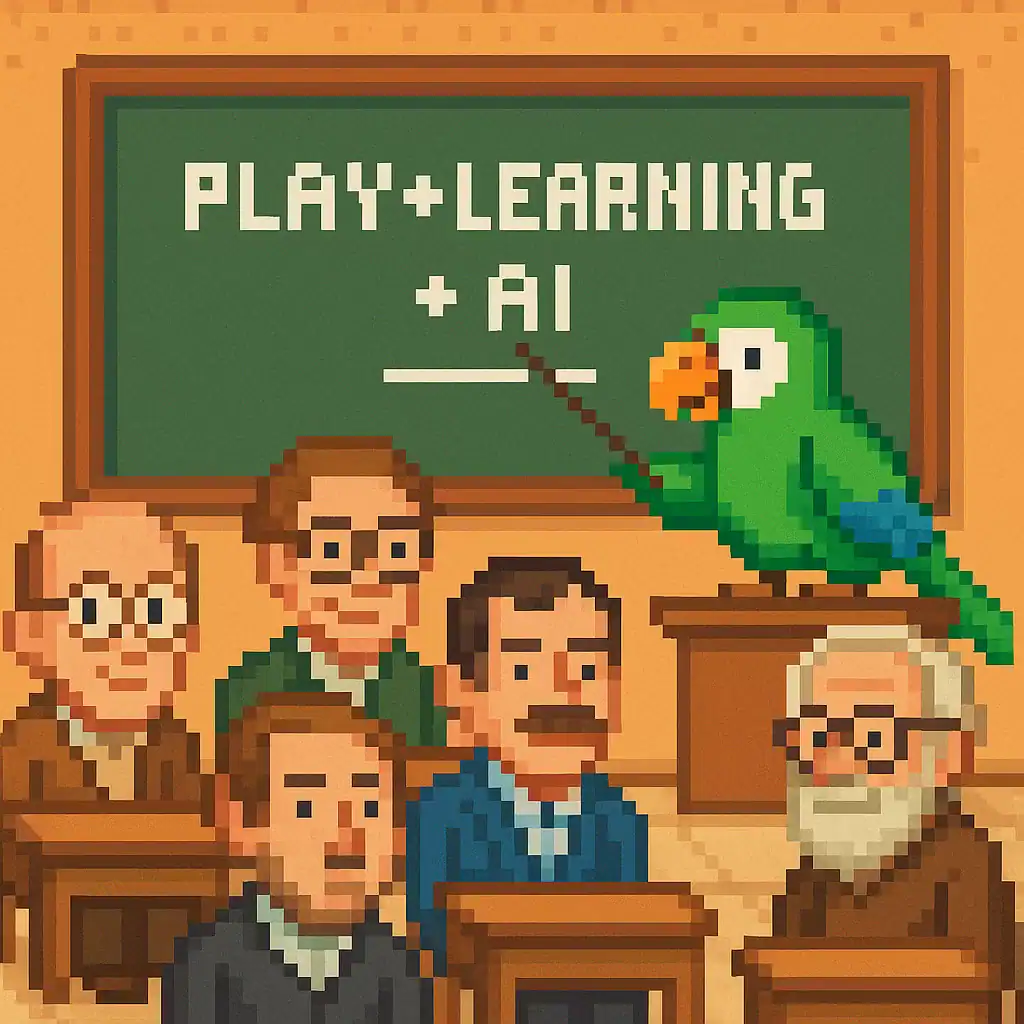
Humans are not the only animals that play and have fun. We don’t need to look far to find examples, our domesticated animals all love to play. And not only cats and dogs: horses, cows, and many other species show an understanding of games in some form.
Games are also part of human culture. Even before the Romans and their Colosseum, hosting all sorts of games with different mechanics, although many were violent when seen through today’s moral lens, these were still forms of entertainment. For how long have we competed through games? Since the Olympics? Studies show that different civilizations, even those with no contact between them, played similar games. For instance, the Mesoamerican ballgame, practiced by the Maya and Aztecs, was a mix of football and basketball long before either existed.
With all that in mind, it’s safe to assume that playing games is part of being human.
Not long ago, video games were considered toys, childish entertainment. Today, the video game industry is one of the largest in the world, and it keeps growing fast. Many games are made for adults, and the idea that video games are for kids is quickly fading. Video games are an incredible way to tell stories, to entertain, and to engage the player. Some focus on storytelling, where the decisions you make directly influence the narrative. Others are more mechanically complex, rewarding creativity and innovation. No matter how a video game is designed or played, and regardless of its content, every game teaches you something, even if you don’t realize it.
Technology, in this scenario, acts as a catapult, launching the possibilities of game creation into an entirely new era. Today it is possible to create educational games that focus on learning, and this idea is not even new. For years, developers and educators have been exploring new ways to combine technology and education to make learning more playful.
The way we study today is surprisingly similar to how people studied 200 or even 600 years ago, maybe since the invention of writing itself. Technology has always improved this old-school method: the printing press allowed knowledge to spread on a scale never seen before; digital media turned heavy books into bytes and megabytes; and the internet made information accessible worldwide at a fraction of the cost. Yet even in our digital era, we still learn in similar ways: digital books, online lessons, professors, students, desks. We read, we listen, that is usually how we learn.
Educational games give this process a twist. They introduce knowledge through challenges, teaching you the mechanics needed to overcome them. In the process, you are learning, trying, failing, and succeeding. That is how we learn real-life skills too, even when we are not consciously studying. How many times have you trimmed your beard or painted your nails and, through trial and error, figured out a better method? Through experimentation, you developed skill. That is a solid way of learning, and it mirrors how science itself works.
Technology and education are natural allies. When combined, they can innovate, engage, and teach in ways that go beyond traditional methods, offering meaningful alternatives for today’s society and its deep connection with technology.
Johan Huizinga and the Homo Ludens
Johan Huizinga was a Dutch historian who explored how play shapes human culture. In 1938 he published Homo Ludens, where he argued that play is not just entertainment but the foundation of civilization itself. Culture, he said, grows from play.
Huizinga described play as voluntary, creative, and guided by rules. It takes place in its own space and time, what he called the “magic circle.” Inside it, people act, imagine, and explore freely. Play has meaning in itself, not because of external rewards.
He found traces of this spirit in art, religion, law, and science. Rituals, sports, and competitions all mirror the structure of play. When society loses this playful essence, it also loses part of its creativity and humanity.
Papagaio follows this same idea. Every quest and dialogue happens inside its own world of imagination, where curiosity and experimentation lead to learning. In this way, our platform keeps Huizinga’s vision alive: learning through play, and play as a path to culture.
Buckingham & Scanlon and the Rise of Edutainment
David Buckingham and Margaret Scanlon are British researchers who studied how children learn through media at home. In their 2005 work Education, Entertainment, and Learning in the Home, they explored how television, games, and digital toys can shape the way young people think and grow. Instead of seeing media as a distraction, they viewed it as part of everyday learning.
They showed that the home is not just a place for rest but also a space where informal learning happens through curiosity, imagination, and play. When children interact with screens, they are not simply consuming content, they are interpreting, experimenting, and creating meaning. This blend of fun and learning gave rise to what became known as edutainment, the idea that education and entertainment can work together to teach more effectively.
Papagaio embraces this same philosophy. By turning language learning into a playful and cultural experience, our platform brings education into the spaces where people already play, watch, and explore. Like Buckingham and Scanlon envisioned, we believe that the best learning happens when curiosity meets joy, when home, technology, and imagination become one.
James P. Gee and the book What Video Games Have to Teach Us About Learning and Literacy
James Paul Gee is an American linguist who became one of the first scholars to seriously study video games as learning environments. In 2003, he published What Video Games Have to Teach Us About Learning and Literacy, where he argued that good games are not just entertainment but powerful systems for thinking, experimenting, and mastering new skills. At a time when video games were often dismissed as distractions, Gee saw them as complex worlds where players actively construct knowledge instead of passively receiving it.
He identified a set of learning principles embedded in well-designed games: immediate feedback, clear goals, a balance between challenge and skill, and the freedom to fail safely and try again. Games encourage exploration, hypothesis testing, and identity building as players assume new roles and perspectives. For Gee, these elements make games ideal learning systems that mirror how humans naturally acquire competence in real life.
Papagaio embraces these same principles. Each quest, puzzle, and dialogue invites players to learn by doing, experimenting, and reflecting within a safe and engaging world. Just like Gee’s vision, our platform turns learning into play and play into a form of literacy that prepares learners for a creative, connected future.
Deterding, Dixon, Khaled & Nacke and the paper From Game Design Elements to Gamefulness
In 2011, researchers Sebastian Deterding, Dan Dixon, Rilla Khaled, and Lennart Nacke published the paper From Game Design Elements to Gamefulness, which became a cornerstone in understanding gamification. They defined gamification as the use of game design elements in non-game contexts to increase engagement and motivation. This simple yet powerful idea influenced how education, marketing, and technology approach user experience, making learning, work, and even daily tasks more interactive and enjoyable.
The authors highlighted that gamification is not just about adding points, levels, or rewards. It is about designing systems that evoke the feeling of playing a game. This involves using elements such as feedback, goals, progress tracking, and voluntary participation to inspire curiosity and a sense of mastery. When learners feel that they are part of a meaningful challenge, motivation grows naturally.
Papagaio follows this vision by integrating the emotional and cognitive aspects of play into language learning. Each activity, quest, and dialogue is designed to promote exploration, reward progress, and maintain a sense of flow. Through gamified design inspired by Deterding and his colleagues, Papagaio turns education into an experience of gamefulness, where fun and learning coexist in the same space.
Karl M. Kapp and The Gamification of Learning and Instruction
Karl M. Kapp is a leading expert in gamification and instructional design. In his influential book The Gamification of Learning and Instruction (2012), he explains how game elements such as points, levels, storytelling, and feedback can transform traditional learning into an engaging and effective experience. Kapp defines gamification as the application of game design principles to non-game contexts with the goal of increasing motivation, participation, and knowledge retention.
His research shows that successful gamification goes far beyond adding badges or leaderboards. True learning gamification connects every mechanic to a clear educational goal. It encourages active participation, problem solving, and intrinsic motivation. When learners are challenged and rewarded in meaningful ways, they build stronger connections with the content and develop lasting skills. Kapp also highlights the importance of narrative structure and feedback loops that create a sense of progress and purpose.
Papagaio follows this approach by blending Kapp’s theories with modern educational technology. Each quest and mini game is designed to make learning Portuguese feel like an adventure, where curiosity leads to discovery and mastery. Through gamified lessons, Papagaio transforms theory into practice, proving that learning through play is not only possible but essential for the future of education.
Luis von Ahn and the Idea of Learning a Language for Free
Luis von Ahn, the Guatemalan computer scientist behind Duolingo, reshaped how people think about language learning in the digital age. In his paper Duolingo: Learn a Language for Free While Helping to Translate the Web, he introduced a powerful vision: a free platform where users could both learn and contribute to the internet’s knowledge base. This idea connected education with social good, turning everyday learning into a global collaboration.
Duolingo’s model used short exercises, instant feedback, and progress tracking to keep learners motivated. Instead of expensive lessons, users could study languages at their own pace through gamified experiences that made repetition enjoyable. By combining accessibility, design, and data-driven engagement, von Ahn built one of the most recognized brands in the edtech space.
Papagaio follows a similar path, using playful mechanics and personalized feedback to make language learning both accessible and meaningful. Like Duolingo, Papagaio believes that education can be free, fun, and powered by the creativity of its learners. This connection between gamification, purpose, and accessibility continues to shape how modern platforms redefine global education.
Hamari, Koivisto & Sarsa and the paper Does Gamification Work? A Literature Review
In 2014, Juho Hamari, Jonna Koivisto, and Harri Sarsa published Does Gamification Work? A Literature Review, one of the most influential academic papers on gamification. Their goal was to understand whether adding game elements to non-game contexts truly improves motivation and performance. They reviewed 24 peer-reviewed studies across fields such as education, marketing, health, and business, building a solid theoretical foundation for the study of game-based learning and engagement.
The authors found that gamification often leads to higher motivation and participation, especially when points, badges, and leaderboards are integrated into meaningful learning experiences. However, they also warned that results vary depending on user type, context, and design quality. Simply adding rewards is not enough. Effective gamification requires systems that connect feedback, challenge, and intrinsic motivation to create lasting engagement.
Papagaio draws on these insights to design its learning environments. Each interactive quest or quiz is not just a reward mechanism but part of a larger motivational system that encourages curiosity and autonomy. By aligning game mechanics with educational purpose, Papagaio follows the principles that Hamari, Koivisto, and Sarsa established: gamification works best when it makes learning genuinely enjoyable and personally meaningful.
Plass, Homer & Kinzer and the paper Foundations of Game-Based Learning
Plass, Homer and Kinzer introduced a solid theoretical framework for understanding how games can support meaningful learning in their 2015 work Foundations of Game-Based Learning. Their research explains that game-based learning combines cognitive, emotional, and motivational elements that help players stay engaged while developing new skills. The paper emphasizes how game mechanics such as feedback, goals, and challenge balance create an optimal learning experience.
According to the authors, effective educational games build a sense of flow, where learners feel fully immersed and motivated to keep progressing. This balance between difficulty and ability turns mistakes into natural parts of learning, encouraging experimentation and resilience. The constant feedback loop helps players connect cause and effect, reinforcing the learning process.
Papagaio follows these same principles to make language learning active, emotional, and rewarding. Each activity and quest is designed to stimulate curiosity, provide feedback, and maintain flow. By applying the ideas of Plass, Homer, and Kinzer, Papagaio builds an identity where education and play merge into one unified experience that promotes genuine understanding and long-term engagement.