
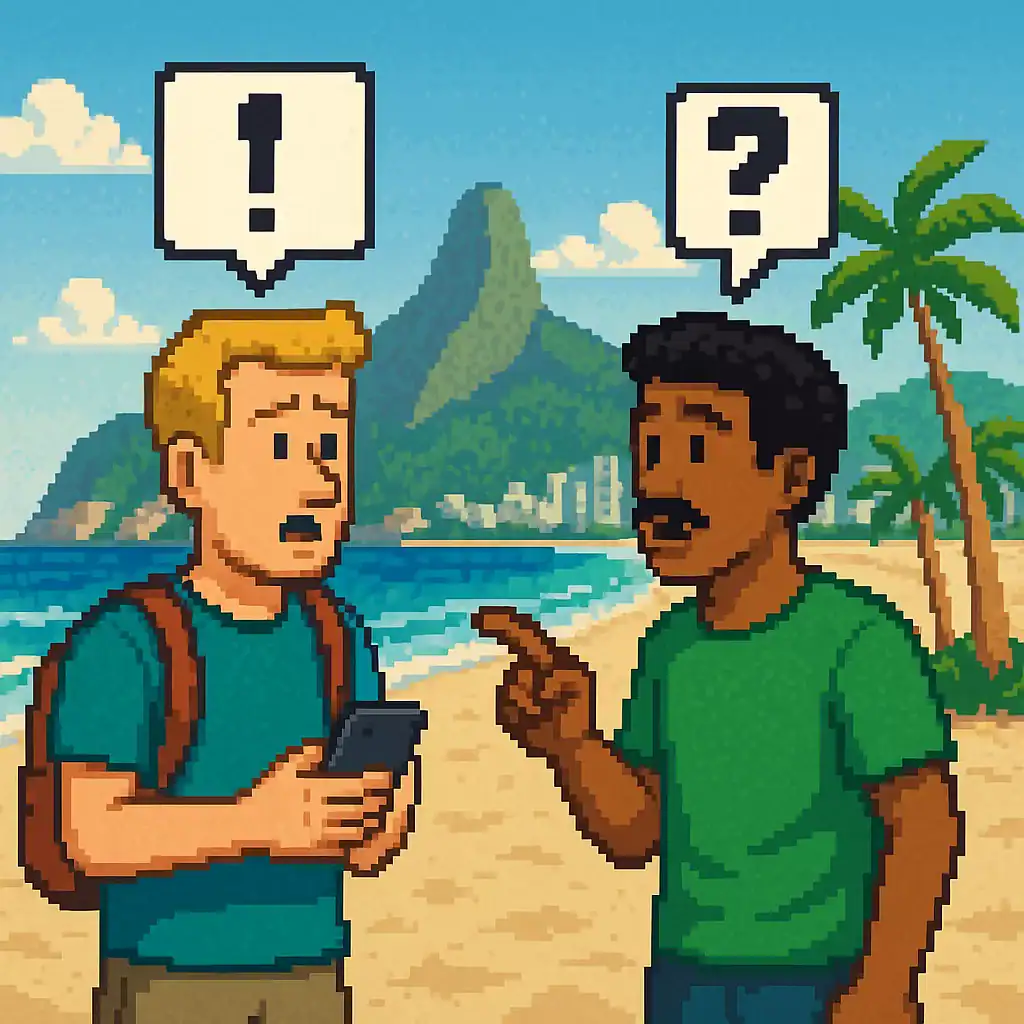
Many travelers assume that speaking only English in Brazil will be enough — especially with tools like Google Translate in their pocket. And while English helps in a few tourist-heavy areas, most day-to-day interactions still happen entirely in Portuguese. From ordering food to asking for directions, relying only on English or translation apps can slow you down and even cause misunderstandings. In this post, we break down the real limits of using English in Brazil, what situations become harder than expected, and the simple Portuguese phrases that instantly make your trip smoother, safer, and way more enjoyable.
1. The Reality of Using English in Brazil
Even though “English in Brazil” is improving in big cities, the language isn’t widely used in everyday life. Most interactions — restaurants, taxis, markets, beaches, stores — happen in Portuguese. People are friendly, but not everyone feels comfortable speaking English.
1.1. English appears mostly in tourist zones
Airports, major hotels, and a few tourist attractions may have staff who speak some English — but outside these bubbles, communication quickly becomes difficult.
1.2. Google Translate isn’t reliable in fast situations
Typing everything into your phone slows interactions down, kills the moment, and sometimes gives awkward or inaccurate translations.
1.3. Regional accents confuse translation apps
Brazil’s accents, slang, and colloquial expressions make real-time translation inconsistent.
2. Why Depending on English in Brazil Doesn’t Work Everywhere
If you’re visiting your partner’s family, taking Uber in smaller cities, buying groceries, or trying to understand menus, speaking only English becomes a challenge.
2.1. Basic services rarely use English
Most waiters, cashiers, drivers, and store employees don’t speak English. It’s not their everyday language.
2.2. Mispronunciations can change meaning entirely
Words like pão, pau, avô, and avó sound similar but mean totally different things — something Google Translate can’t fix live.
2.3. Politeness forms matter
A simple “por favor”, “obrigado” or “com licença” instantly makes interactions smoother.
3. Can You Rely on English in Brazil in Common Travel Situations?
Below are the moments where just English — even with Google Translate — becomes tricky:
Asking for directions
Ordering food at local restaurants
Buying tickets (bus, metro, attractions)
Talking to your partner’s family
Explaining allergies and restrictions
Checking into small hotels or pousadas
Asking for help in emergencies
English helps a little — but Portuguese helps a lot.
4. The Essential Phrases You Need (Instead of Only English)
Here are examples of simple Portuguese phrases that instantly fix 90% of travel problems:
“Onde fica o banheiro?” (Where is the bathroom?)
“Quanto custa?” (How much is it?)
“Pode me ajudar?” (Can you help me?)
“Eu não falo português.” (I don’t speak Portuguese.)
Learning these ahead of your trip sets you up for real confidence.
5. Why Learning a Little Portuguese Is a Game-Changer
5.1. You avoid uncomfortable misunderstandings
Menus, addresses, and instructions become clear.
5.2. You move faster
Ordering, paying, asking questions — everything becomes smooth instead of stressful.
5.3. Brazilians LOVE when you try
Even speaking a little Portuguese makes a huge difference. People appreciate the effort and become even more welcoming.
Why English in Brazil Isn’t Enough For a Smooth Trip
Many travelers underestimate how often they'll need Portuguese — and how much easier everything becomes once you learn just the basics.
Relying only on English in Brazil works in a few situations — but learning even simple Portuguese transforms your trip. You avoid misunderstandings, move with confidence, and connect better with people.
If you want a fun, practical, and fast way to prepare, check out our $10 Portuguese for Travelers guide — designed specifically for visitors who want to avoid stress and enjoy Brazil with confidence.